Tuesday, 26 November 2013

American's view of Rob Ford

1) What is the American Perspective on Rob Ford? Why do they care?

The American's think Rob Ford is a joke and therefore gain amusement out of what he has to say. The only reason they care about him is to make fun of him which in some cases could help their shows get higher ratings.

 2) How has Rob Ford controlled his message through the American Media?

He has taken the American media's attention as a positive thing, while in truth he is being made fun of. Any attention he gets from all types of media he tries to turn it into a positive thing, because he sees attention as a good thing. He tries to control his image and the way people see him in America, when in reality he is making  a bigger fool of himself.

3)  Is the American media well informed on the issues that surround Rob Ford. Explain.

The Americans are not well informed of the issues surrounding Rob Ford. They don't know his history and therefore are only informed about current issues surrounding him. If they were well informed, they would have probably payed more attention to him when he came into office.

4) What do you think are Rob Fords prospects for a future in Politics? Explain. 

I think if Rob Ford doesn't get voted back into office as mayor of Toronto he will try and gain a higher position in the government of Canada. Since the cities budget came out a week after Rob Ford was stripped from all his power he is starting to look very promising as the budget shows an increase of $64 a year in property taxes and more. Therefore I think a lot of people will be inclined to re-vote him into office.

This is a skit from SNL (Saturday Night Live) of Rob Ford:
    http://www.youtube.com/watch?v=_sX5nVRzJIM       


Thursday, 7 November 2013

Rob Ford Scandal


  1. Who made - and who sponsored - this message, and for what purpose?

The Daily show is the one who created this video. The purpose of this news report is to make fun of politicians (specifically Rob Ford in this video) from a very leftist- wing point of view.

2.                  Who is the target audience, and how is the message specifically tailored to them?

The target audience of this message is for the people of Toronto, for whom this story is relevant.  People in Toronto know that Rob Ford is not doing a great job representing our city and his poor judgement and lack of insight have become a joke to everyone around the world. Jon Stewart makes this report very amusing and funny, therefore making this message geared towards Torontonians.

3.                  What are the different techniques used to inform, persuade, entertain, and attract attention?

Jon Stewart is a brilliant political satirist, who through the use of wit and sarcasm denounces Rob Ford.  He does this by using video clips of Rob Fords’ radio apology (but chosen specifically to humor the public), and showing pictures with large eye catching slogans to grab the audience’s attention.

4.                  What messages are communicated (and/or implied) about certain people, places, events, behaviours, lifestyles, etc.

The message communicated through this video suggests that Rob Ford is a bad influence on Toronto, and therefore should not be running the city.   Rob Ford should get his ** together because he is the mayor of Toronto and his behavior is completely inappropriate for someone of his rank.  Apologies are meaningless in the face of continuous lies.  Unfortunately, the show also communicates that while Toronto has Rob Ford as its mayor, it is a less desirable place for people to visit.

5.                  How current, accurate, and credible is the information in this message?

The information in this video is credible because Jon Stewart is showing much seen footage of Rob Ford either apologising, admitting or lying about different things people have accused him of doing. The clips and pictures have been aired on Toronto T.V. and radio stations.

6.                  What is left out of this message that might be important to know?

Chief Bill Blair’s opinion has been left out of this message. He would be important to mention in this video because he is the one who came out and said they (being the police) have the video of Rob Ford smoking Crack-Cocaine and making racist and homophobic remarks. Even though the point of this video is to make fun of Rob Ford essentially it would have completed the truth about why Rob Ford is coming out and making all of these big apology statements to the public.  


Here is the link to the Jon Stewart video: http://www.youtube.com/watch?v=9WV7YtmHEuw

Monday, 28 October 2013

Bell Media and tracking/distributing customers media habits

1)      Why do you think Bell Media would want to track your media consumption on their services? 

I think Bell media wants to track our media consumption because it allows Bell to see what topics we are interested in. By allowing Bell to see what topics we are interested in they can make the advertisements we see more geared towards our interests making us more inclined to buy a product. It also gives the customer a chance to see ads that they actually want to see, rather than having a bunch of random ads on media sites they use.

2) Do you think that Bell should have the right to track and distribute the media habits of its customers? Yes or no (explain).

I think Bell should only have the right to track and distribute our media habits only if the customers agree for their media habits to be tracked. If we don’t want our media habits to be tracked them as a customer we should have the right to not have our personal media habits tracked.

3) Who benefits from the tracking of customers media habits?

The advertisers will benefit from the tracking of customers media habits because the customers are now seeing advertisements that they actually care about, which may make them more inclined to buy one of the advertiser’s products. Bell also benefits from customer’s media habits because if they prove to the advertisers that they are more of their consumers will buy their products, the advertisers will pay Bell more money to have their products advertised. This will benefit Bell because in the end Bell will end up receiving more revenue from the advertising firms

4) What do customers stand to lose if their media consumption is tracked and distributed?


If a customer’s media habits are tracked and distributed by Bell, it allows Bell free access to our information. As a customer we will get nothing in return for giving Bell access to our information. However we are forced to pay hundreds of dollars a month to Bell for our services yet when we give them something (that will benefit them) for free we are not given any recompenses. This is what customers stand to lose if they allow Bell to track and distribute their media consumption. 


Thursday, 24 October 2013

Tracking Trends
Names: Emma, Tazeen, Gabe, Kiya
1)     In your group of four choose a type of trend that you would like (T.V., Internet, clothing, music, gaming, books, magazines, sports, etc.)
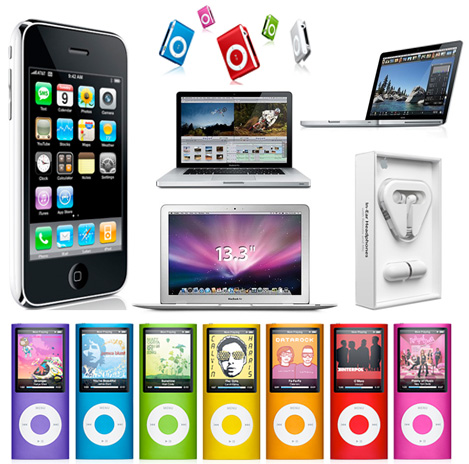
We are going to be tracking the trends of Apple products
2)     What would you like to find out about the trend?
We would like to find out what the most popular Apple product is and why it is so popular. We would also like to determine what makes people attracted to Apple products and what specifically makes Apple such a large name brand today.
3)     What is your demographic? ( gender, age, geographic location, job)
Anybody who uses technology and more specifically Apple products
4)     What kind of non-biased questions are you going to ask to gather statistical analysis about your trend?
We are going to ask questions along the lines of what is your favorite Apple product and why? Do you think Apple effectively markets their products? What do you like and dislike about Apple? And what does Apple do to make their products so popular?

            5) Create a Survey Using surveymonkey.com and distribute the URL to the class. Collect the data and use it to inform your documentary.  

This is the link to our survey: http://www.surveymonkey.com/s/L5GXBY7


Internet safety poster


 What is the message of the Poster?
The message of my poster is to be safe on the internet. My poster touches on some of the most important things to be aware of while on the internet, and some important tips regarding awareness and safety while online.  
Who is your target audience?
My main target audience is teenagers and young adults, who use the internet on a regular basis.  However my poster can send a message to anyone that uses the internet or has some kind of social media account.
How effective is your message? Is your poster clear?
My message is effective, because I touch on some of the most important topics of internet safety. My poster is clear and is easy to read and understand. I used colours and lettering that complimented each other to grab the reader’s attention, so my message could clearly be 
conveyed. 


Tuesday, 22 October 2013

Trend Tracking

The proposal:


We are going to be following the trend of Apple technology. We are going to make a PowerPoint presentation to display our findings.  We are going to be observing the different types of Apple products teenagers and adults carry around, as well as accessories for their devices. We will be observing what is the most common types of Apple products people carry around and ask questions such as why these products are so popular and what makes them so desirable for buyers. 

Thursday, 10 October 2013

Merchants of cool

1.      What are people watching, wearing, listening to, playing and reading?
Some popular trends people are into are:
Watching: Vampire diaries, Pretty Little Liars, Survivor blood vs. water, Modern family, how I met your Mother, Teen wolf, Glee, The Amazing race and The Voice
Listening: Lorde, Avicii, Miley Cirus, Katy Perry, Justin Timberlake, Jayz, Drake, Zedd, Justin Beiber and Ellie Goldings
Playing: GTA 5, Just Dance, FIFA 13 and 14, Candy Crush and Mario Kart
Reading: Mortal instruments, Hunger Games trilogy, Harry Potter series, Lord of The Rings trilogy, Divergent trilogy, The Gathering and The Hobbit
2.      Are their common trends among peer groups or are people discovering and exploring their own individual cultural expressions?
There is a mixture of both. There are people who follow trends and people who are trying to start new trends. Some people are a mix of both creating trends and following them.  In my opinion people who follow trends are either trying to fit in or are simply wearing the trends because they like how they look. People who are creating their own trends/ are wearing their own style of clothing don’t want to be main stream. They want to make their own type of cool, or are maybe even are trying to start their own trends and who says they can’t! People are individuals and what they wear is a means of expressing oneself.
3.      Do people strive to be the mooks and midriffs of the “Merchants of Cool” or do they seek different ways of interacting with others? 
Most teenagers I know don’t per say strive to follow the trends, however they sometimes we end up following them anyways. People don’t always follow trends just because they want to be cool. They follow the trends because they like what the trend is or because they simply because they want to fit in our clothes can say a lot about us and following the trends can sometimes give us a good image of ourselves. The trends can make us look more grown up or professional, therefore making us feel important and in some environments cool. However being cool isn't always why people decide to follow trends.
4.      What affects the current cultural trends at Riverdale?
The factors affecting current trends at Riverdale are the different ages of students, our friends, what everyone else thinks is trending, our gender and our personality.
5.      Is there one specific genre or form of media that influences trend or are students informed by a variety of media? 

Students are influenced by a variety of media. There are so many different types of media today, giving students a variety of things to choose from. One of the main influences would be magazines, movies or T.V shows simply because we often watch or look at these types of media multiple times each day.